
What Evidence Strengthens a Bicycle Accident Claim?
Sept. 1, 2026
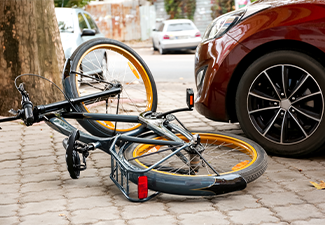 Evidence such as scene photos, police reports, witness statements, medical records, and documentation of financial losses strengthens a bicycle accident claim. The more thorough and well-organized this evidence is, the stronger your position when negotiating with an insurance company or pursuing a claim in court.
Being involved in a bicycle accident can be a frightening and disorienting experience. In the moments and days that follow, it can be difficult to think clearly about what steps to take next.
At Richard L. Vanderslice, P.C. in Philadelphia, Pennsylvania, we work with bicycle accident victims to help them understand the evidence needed to support a strong claim. We guide you through the process with the same commitment and personal attention we bring to every case.
We will help identify what evidence you already have, what still needs to be gathered, and how to preserve it properly, since some evidence can become more difficult to obtain or verify as time passes. Contact our office today to schedule a consultation.
Photos and Video From the Scene
Visual evidence is often one of the most persuasive tools available in a bicycle accident claim. Photos taken at the scene can capture details that may otherwise be lost within hours, such as skid marks, the final resting position of the bicycle and vehicle, and the surrounding road conditions.
This documentation helps create a clear and accurate picture of what happened. It also provides context that words alone may not fully convey.
Wide shots of the scene: Capturing the full accident scene, including nearby intersections and traffic signals.
Close-up images: Documenting vehicle damage, bicycle damage, and any visible injuries.
Road conditions: Photographing hazards such as potholes, debris, or faded lane markings.
Video footage: Gathering nearby traffic cameras, doorbell cameras, or dashcam footage when available.
If you can safely do so at the scene, take these photos and videos yourself with your phone. If you weren't able to gather this evidence at the time, we will help identify and seek available surveillance or other video footage before it is deleted or overwritten.
Police Reports
When law enforcement responds to the scene, the resulting police report becomes an important piece of documentation. Officers typically record the positions of the vehicles involved, note any citations issued, and gather statements from those present.
This report often serves as a foundational reference point throughout the claims process. Although a police report can provide an important account of the incident, it is not necessarily a complete or definitive determination of fault. Insurance companies and courts may consider it alongside photographs, witness statements, medical records, physical evidence, and other available information.
You can request a copy of this report from the responding police department once it becomes available. Our experienced personal injury attorney will review it closely on your behalf and help address any inaccuracies that may need clarification.
Eyewitness Statements
Individuals who witnessed the accident can offer a perspective that helps confirm what took place. Their observations may speak to details such as right-of-way, vehicle speed, or signal timing, all of which can support your account of the incident.
Because witnesses can be difficult to reach once they leave the scene, it helps to collect names and contact information as soon as possible. If possible, obtain the witness's name and contact information, and leave detailed follow-up questioning to your attorney.
Medical Records and Documentation of Injuries
Thorough medical documentation plays a central role in connecting your injuries to the accident itself. This includes emergency room records, imaging results, physician notes, and records of any ongoing treatment or physical therapy.
Seeking medical attention promptly serves two important purposes. It supports your health and recovery, and it also creates contemporaneous documentation of your symptoms, diagnosis, and treatment, which may help establish the connection between the accident and your injuries.
Emergency care records: Documenting the initial evaluation and treatment received.
Diagnostic imaging: Confirming the extent of injuries through X-rays or scans.
Treatment history: Tracking ongoing care such as physical therapy or follow-up visits.
Photographic evidence: Capturing visible injuries as they heal over time.
We recommend seeking medical care as soon as possible after your accident, even if your injuries seem minor at first, and keeping up with any follow-up appointments your provider recommends. We will help you gather and organize the records that connect your treatment to your claim.
Damage to the Bicycle and Protective Gear
The condition of your bicycle and any protective gear worn at the time of the accident can offer meaningful insight into how the collision occurred. Damage to the bicycle or protective gear may provide physical evidence about the collision and, when appropriate, can be evaluated by an expert alongside other evidence.
Under Pennsylvania law, however, the failure to wear a bicycle helmet cannot be used as evidence of fault or treated as contributory negligence in a civil claim.
We encourage you to preserve this equipment rather than repairing or discarding it right away, so it can be reviewed later if questions about the accident arise. This can be particularly helpful when liability is disputed.
Cell Phone and Traffic Data
In some cases, additional evidence may be available through cell phone records or vehicle data. When distracted driving is suspected, phone records obtained through the appropriate legal channels may help clarify whether a driver was using their phone at the time of the accident.
Some vehicles are equipped with event data recorders that may capture information such as vehicle speed, braking, and other crash-related data in the moments leading to a collision. This kind of data can be especially valuable in car accidents where fault is disputed, since it offers an objective account of what happened in the seconds before impact. Depending on the location, traffic signal records or other municipal records may also provide additional information about conditions at the time of the crash.
Documentation of Financial Losses
Beyond medical expenses, it's important to account for the broader financial impact of an accident. Keeping organized records as costs arise makes it easier to present a complete and accurate picture later on.
Missed work records: Documenting time away from work due to injury.
Repair and replacement receipts: Tracking costs related to the bicycle and any damaged gear.
Out-of-pocket expenses: Recording costs for medications, medical equipment, or related needs.
Transportation costs: Noting expenses incurred while unable to ride or drive.
We recommend keeping a simple folder, physical or digital, where you save these records as they come in. We will use this documentation to calculate and support the economic losses included in your claim.
Building a Strong Claim With a Bicycle Accident Attorney
Scene photos, police reports, witness statements, medical records, and financial documentation all work together to build a stronger bicycle accident claim. The sooner this evidence is gathered, the better it holds up. Once you bring your case to us, we will lead the effort to gather outstanding evidence, communicate with the insurance company, and pursue the compensation you deserve, so you can focus on your recovery.
From our office in Philadelphia, Pennsylvania, Richard L. Vanderslice, P.C., serves clients throughout Philadelphia County, Montgomery County, and Delaware County. We help bicycle accident victims gather the evidence they need to pursue fair compensation. Contact us today to schedule a consultation.